
What would you tell your sister if she told you that, to feel safe at work, she needs a panic button within reach? That someone else must be on-site whenever a customer is there. That women share the names and photos of men who have frightened or hurt them. That she needs a city-approved “safety plan” and a way to escape if she feels her life is in danger.
What if she told you her job requires her to be alone, often naked, with random men who have paid for sexual access to her body on their terms?
Would you say, “At least you’re taking workplace safety seriously”? I doubt it.
Cardus released a new paper this year called Is “Sex Work” Actually Work? Its answer is clear: prostitution is not simply another form of labour because it treats a human being as a means to someone else’s gratification.
Survivors have been saying this for years.
I spent seven soul-destroying years in Edmonton’s licensed commercial sex industry. I wanted to believe prostitution could be made safe. That’s what society told me.
When I started experiencing serious psychological harm, I didn’t blame prostitution. I blamed the “workplace,” management and conditions.
If prostitution was work, perhaps this was simply a workplace problem. Fix the conditions and maybe you fix the harm.
I eventually built and operated my own licensed “Body Rub Centre” with that idea in mind. I wanted something cleaner and safer, with more control for myself and the other women in the sex industry.
It still didn’t fix the fundamental problem.
No licence, camera or workplace policy can change this: a man is paying for sexual access to another human being who, absent the money, almost certainly would not be entertaining his advances.
Cardus arrives at that same problem through philosophy and economics. It argues that prostitution undermines human dignity because it turns the person into a product, and calling it “work” does not change what the transaction requires.
It is refreshing to see Canadian research returning to questions of dignity and human rights that feminist trailblazers, many of them survivors themselves, fought to keep at the centre of this conversation for decades.
We can call it “adult services,” “body rub,” or “sex work.” We can talk about safety standards as if proper administration makes prostitution ordinary employment. But why are all those extraordinary safety precautions necessary in the first place?
Money can create agreement to a transaction. It cannot create sexual desire. It does not turn unwanted sexual contact into wanted sexual contact.
I lived that distinction, while also struggling to accept that my participation did not meet the basic tenets of sexual consent: freely given, fully informed, reversible, specific and enthusiastic.
Yet so much of the political conversation gets reduced to one word: choice.
“Did she choose it?”
If the answer is yes, everything else is treated as irrelevant.
It isn’t.
Not every woman in prostitution is trafficked or physically forced. Some enter voluntarily. Many defend the prostitution system.
I did. For years.
There is a continuum between coercion at one end and greater autonomy at the other. People can have agency and still be exploited.
Cardus points to a federal program review in which more than two-thirds of participants reported physical or psychological coercion. More than 80 per cent were trying to leave prostitution, while only 21 per cent were recorded as successfully exiting.
If we genuinely care about autonomy, we cannot defend someone’s right to enter prostitution while showing little interest in whether she has a realistic way out.
Can she pay rent? Does she have somewhere safe to go? Can she replace the income? Does she need counselling, treatment, education, child care or help finding work?
Those are questions about freedom and authentic sexual consent too.
Public policy cannot focus only on her “choice” while ignoring his. Canada’s law deliberately targets demand, recognizing that buying sexual access to another human being is part of the equation.
Alberta has heard this before. The 2021 Reading Stone Report, built on 18 months of conversations with survivors of commercial sexual exploitation, called for survivor-centred services, public education, coordinated responses and legislative change. Survivors did not simply describe what happened to them. They identified the gaps that allow exploitation to continue and make getting out so difficult.
The important thing about the Cardus paper is not that survivors needed a think tank to validate their experiences. It is that research, legal analysis and public policy are finding their way back to conclusions survivors have voiced for decades, despite being dismissed and silenced: the human body is not another commodity, sexual access is not another consumer service, and prostitution does not become harmless because government issues a licence.
I once believed better regulation could make prostitution safe. The version of me who was still in it needed to believe that. But the version of me who is safe and secure now, who has pursued healing, emotional freedom and genuine love, knows better.
Let’s work together to help more women find that same freedom.
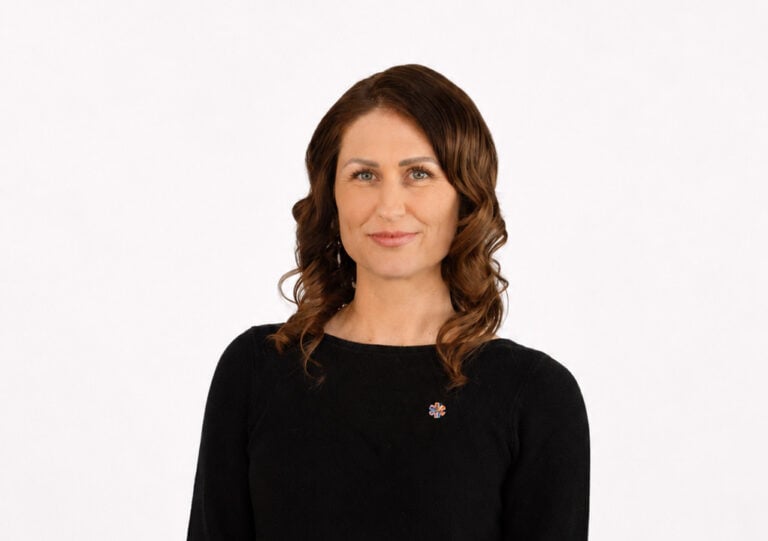
Andrea Heinz Bio:
Andrea Heinz is a lived experience peer-reviewed scholar on commercial sexual exploitation. She currently serves as the Project and Policy Lead for the Alberta Centre to End Trafficking in Persons.
Andrea’s work has primarily focused on demand, aligning with her involvement in commercial sex offender programming since 2013. She co-authored When Men Buy Sex: Who Really Pays?, combining empirical analysis with lived experience narratives. In 2022, she testified as a Parliamentary Witness during the review of Canada’s Protection of Communities and Exploited Persons Act (PCEPA). Her work has been recognized in both the House of Commons and the Senate, and she has received numerous awards for her advocacy. Andrea holds a diploma in Correctional Services and is completing a Bachelor of Professional Arts in Governance, Law, and Management.